
Canada must make a course correction immediately to compete in “predatory” global economy: Jim Balsillie

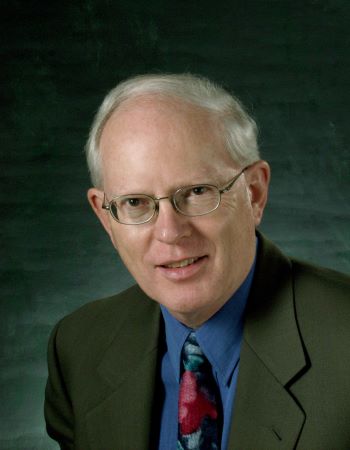
 Canada needs to wake up and make a course correction to compete in a new “predatory” global economy based on intangible assets, says businessman and philanthropist Jim Balsillie.
“With the rise of AI, we’ve entered the era of machine knowledge capital, a new form of productive capital that competes with and complements human capital,” said Balsillie, retired chair and co-CEO of Research in Motion (BlackBerry) and co-founder of the Council of Canadian Innovators.
But because Canada missed the shift from an economy based on producing tangible goods to an economy driven by intangible assets, “we’re now seeing Canada’s standard of living in steady decline,” he said during a webcast on “Building Canada’s Workforce,” presented by Century Initiative and partners of The Globe and Mail.
“No country has made less of its potential than Canada in the last 30 years,” Balsillie maintained.
The digital transformation has created a new economy in which wealth, power and security are rooted in the ownership of intellectual property and control of data and artificial intelligence, he said.
These assets, which now make up over 90 percent of the S&P 500’s $49-trillion total value, behave differently in the market than tangible goods and require different strategies, he added.
Yet “much of the current purported innovation activity today [in Canada] is still stuck in outdated 1970s thinking,” Balsillie said.
Canada’s per capita GDP has been shrinking by 0.4 percent a year since 2020 – the worst rate for any developed economy in the top 50, he noted.
The Organisation for Economic Development and Co-operation has projected that Canada’s economy will be “the worst-performing advanced economy over 2020 to 2030 and the three decades after.”
“This is a result of a lack of strategic reorientation as the world changed,” Balsillie said.
In an economy based on intangible assets, there are no longer any “spillover effects” – the value-added spillovers that were generated by production of tangible goods, he said.
Foreign-based branch plants in Canada operating in the tangible goods economy produced spillovers such as local management, locally produced technology, domestic supply chains, and a domestic tax base.
But in the digital economy, “countries and companies incredibly predatorily govern the spillover, so that the management is centralized back home, there’s no tax base here, the IP and data are exfiltrated – you don’t participate in the wealth effects,” Balsillie said.
Google and Facebook have no supply chains in Canada, he pointed out. The headquarters for Microsoft Canada is in Ireland.
Foreign Big Tech companies have very aggressive non-compete and confidentiality clauses for their employees to make sure that none of the spillovers come domestically, but rather go to where these companies are headquartered, he said.
“Our policy thinking never updated with this change,” Balsillie said. “So it’s a catastrophic policy failure over the past 30 years.”
Economic “rents” – not production of goods – drive today’s global economy
Canadian policymakers focused during the last 30 years on manufacturing of goods and assembly of products, Balsillie said. “They neglected to ensure control of R&D, design and AI compute.”
Such a strategy locks Canada into a race to the bottom with poor terms of trade where cost is the only basis of competition, he said.
Balsillie pointed to the federal government’s $57-billion investment in foreign-headquartered EV battery manufacturing plants as an example of this “failed strategic thinking.”
Canada also missed taking advantage of foundational AI research done at the University of Toronto and funded over 30 years by taxpayers, he said.
Taxpayer-funded work on foundational EV battery technology was done at Dalhousie University, but is now used by Tesla.
“We invent but don’t appropriate, because it’s a different skillset of appropriation in this changed economy,” he said.
The U.S.’s manufacturing output has experienced continuous growth over the last 60 years, Balsillie noted. But it did so with fewer people as automation displaced labour, because investments in intangibles and ownership drove higher outputs.
“While the U.S. gained efficiency, control and value-add, Canada took a different path by doubling down on disaggregated production labour, without a strategy to own the IP and AI/data to capture the high-value segments,” he said.
Canada missed seeing the five major structural shifts that fundamentally broke the assumptions of traditional economic models, including British economist Nicholas Kaldor’s model rooted in a tangible, production-based economy, Balsillie said. These shifts are:
- Global trade agreements in the early 1990s that arbitraged labour to lower-cost countries.
- The emergence of the global knowledge-based economy in the mid-1990s that separated tangible production supply chains from intangible value chains.
- The emergence of the E-Commerce Revolution in 2000 that created a new social class, the “precariat,” with destabilized employment norms and undermined long-term worker security.
- The emergence of the global data-driven economy around 2010 that commodified human attention and pioneered “gig economy” employment structures.
- The emergence of the contemporary machine knowledge capital era where AI is a new form of productive capital that competes with and complements human expertise.
“These shifts have disrupted career pathways in every sector,” Balsillie said. “[Job] stability and security have been replaced with short-term contracts, gig works, and no jobs for new graduates.”
“Entire occupations have been reshaped or eliminated while new roles demand skills and experience that many workers have not been given the opportunity to acquire.”
The number of people working from home now exceeds the COVID-19 pandemic peak (28 percent compared with 10 percent in 2019), he noted. “Firms now compete for talent across borders in ways they never did before, as workers can live in one country and work in another.”
Canada must learn the particular features of capitalism in the era of intangibles, Balsillie said.
“This realignment in capacity building needs to take place at every level so our students can have the same opportunities for meaningful careers, our business executives can ensure our companies thrive, and so our policymakers can properly govern for contemporary realities.”
U.S. engages in strategic predatory behaviour in the knowledge-based economy
Today’s knowledge-based economy is a “rentier system of strategic interests, of win-loss” – not a production economy, Balsillie said. The U.S. and other countries that adapted to and took advantage of the global economic shift collect “rents” on intangible assets such as AI and data.
Such an economy “is not a comparative advantage of shared destiny. Somebody needs to be the landlord [and] somebody needs to be the tenant,” he said. “So it invites strategic behaviour. It’s not a shared economic system.”
Balsillie pointed to four examples of the U.S.’s strategic behaviour aimed at enhancing U.S. economic and security dominance:
- The Trump administration’s 2020 white paper on AI, to ensure the U.S. remains the global leader in AI.
- Global trade tariffs that the Trump administration authorized under the International Economic Powers Act.
- The GENIUS Act that created the first comprehensive U.S. regulatory framework for payment stablecoins.
- March-in rights under the Baye-Doyle Act, which allow the federal government to compel patent holders (such as companies and universities) to license their federally funded inventions to third parties, typically when the patent holder fails to commercialize the invention adequately.
The U.S. is engaged in predatory behaviour that’s being weaponized because “that’s what strategic behaviour rewards,” Balsillie said.
“It means the rich are getting richer and the poor are getting poorer. We need to get more of those rich in Canada,” he said.
However, Canada’s current economic development strategies are much closer to Russia’s and the Democratic Republic of Congo’s than they are to those of the Scandinavians, Europeans or Americans, Balsillie said.
He likened the current global economic system to the conditions of deep-seated social inequity and severe economic hardship that preceded the French Revolution. “I think the system’s going to break at some point.”
For Canada, “This is our moment to wake up,” he said. “It’s time for a course correction because people deserve a better set of outcomes.”
After the Carney government released Budget 2025, Balsillie acknowledged the new investments in AI, quantum and defence as important steps, and he welcomed a framework for stablecoins.
But he said that the budget didn't address the crucial shift to a digital economy, where intangible assets such as data and intellectual property are paramount, including the need to own IP.
Despite big spending, he saw the budget as an outdated model, lacking a bold vision for a sovereign, high-value digital economy.
The key to a course correction is growing strong Canadian domestic firms, not supporting foreign-headquartered branch plants, Balsillie said during the webcast.
“We have to rebuild our firms and that’s going to be the difficult process of building our house of bricks,” he said. “Create better firms. Quit poking them in the eye. Buy from them. Champion them.”
What can Canada do to correct course?
Balsillie described Canada’s reliance on friendshoring (sourcing and manufacturing goods from countries considered political and economic allies) as “absurd” amid “incredibly predatory” business environments.
“There are no friends in business. There are just interests,” he said. “Everybody thinks a million dollars is better in their pocket than in your pocket.”
Today’s global digital economy driven by intangibles divides people and countries into the “hyper-fortunate” and the “dispossessed,” Balsillie said.
“We have governments exhorting us to adopt AI, not understanding that there are over 2 million patents issued on AI implementation,” he noted.
The moment a business implements a patented AI application, they get a demand letter from the company holding the patent, requesting payment, he said. There are thousands of these demand letters issued every day, in what amounts to “an ordering of economic rents.”
The federal government provides $7.5 billion per year in research funding, including $4.2 billion to the three research granting councils and $3.3 billion to intramural research by various government departments, Balsillie pointed out.
“But there’s nothing coherent, even remotely, managing those enclosure structures” for collecting economic rents on AI, data and other intangible assets, he said.
That has left Canada with no domestic firms to adequately absorb the country’s highly educated talent, Balsillie said. “There aren’t jobs anyway and the jobs don’t pay very well.”
On top of that, he added, Canada has “monopolistic supplier structures” that result in higher costs. “And then you have digital realms that hurt people. Paycheques are down, costs are up, people are hurt.”
Balsillie said there are five things Canada can do to start to correct course:
- Implement an institutional approach to capture some of the $7.5 billion annually provided to support research, through some form of agency or Crown corporation.
- Ensure there is “proper sovereign compute” with proper direction on sovereign compute, rather than supporting U.S. subsidiaries.
- Create capacity in international trade expertise.
He pointed out that the U.S. has had 700 experts for 50 years, by an act of Congress, who constantly advise the federal government on trade and trade agreements.
But in Canada, “we just gather an ad hoc group at one minute to midnight, with no expertise in these files,” he said.
“So we have to create that state capacity through reestablishing our advisory committees, which we shut down over 20 years ago, coupled with an economic council.”
- Implement “very substantial” policy on decentralized finance.
Such action is required because the U.S. has become very predatory on digitization of currency, he said.
- Implement a much more substantial reorientation toward Canadian companies.
The federal government “talks a good game, and then the [procurement] money goes to [Australia’s] BAE Systems for over-the-horizon radar, for German and Southeast Asian submarines. The big money somehow never supports our domestic firms,” he said.
Canada needs “a proper orientation to domestic firms, where the wealth effects stay here, where the ecosystem dynamism is here, where the jobs are here,” Balsillie said.
“Our policy thinking has put us into this hole,” he said. “Canada built a house of sticks and we need a house of bricks.”
“We can migrate from a house of sticks to a house of bricks. But if we migrate from a house of sticks to another house of sticks, we will be a second-world country. The structural decline is inevitable.”
R$
| Organizations: | |
| People: | |
| Topics: |



Events For Leaders in
Science, Tech, Innovation, and Policy
Discuss and learn from those in the know at our virtual and in-person events.
See Upcoming Events
You have 0 free articles remaining.
Don't miss out - start your free trial today.
Start your FREE trial Already a member? Log in
By using this website, you agree to our use of cookies. We use cookies to provide you with a great experience and to help our website run effectively in accordance with our Privacy Policy and Terms of Service.